Quick answer
A palm astrology reading looks at the shape of the hand, the major palm reading lines, the mounts, and smaller marks such as rings or bracelets. It is used as a symbolic way to talk about temperament, choices, love, work, and life phases.
The main lines are the heart line, head line, life line, fate line, and marriage lines. A palm reader should compare both hands instead of treating one mark as fixed fate.
There are hundreds of small lines on the palms. Some are clear. Some are faint. Some change over time as the skin changes. Palmistry gives those marks a language, but it should not turn every crease into a threat or promise.
Some people believe strongly in what is written on their hands. Others shrug and move on. Many still look at a reading hand line out of curiosity. The useful middle ground is simple. Read the lines as clues, not as a sentence already passed.
How palm astrology reading works
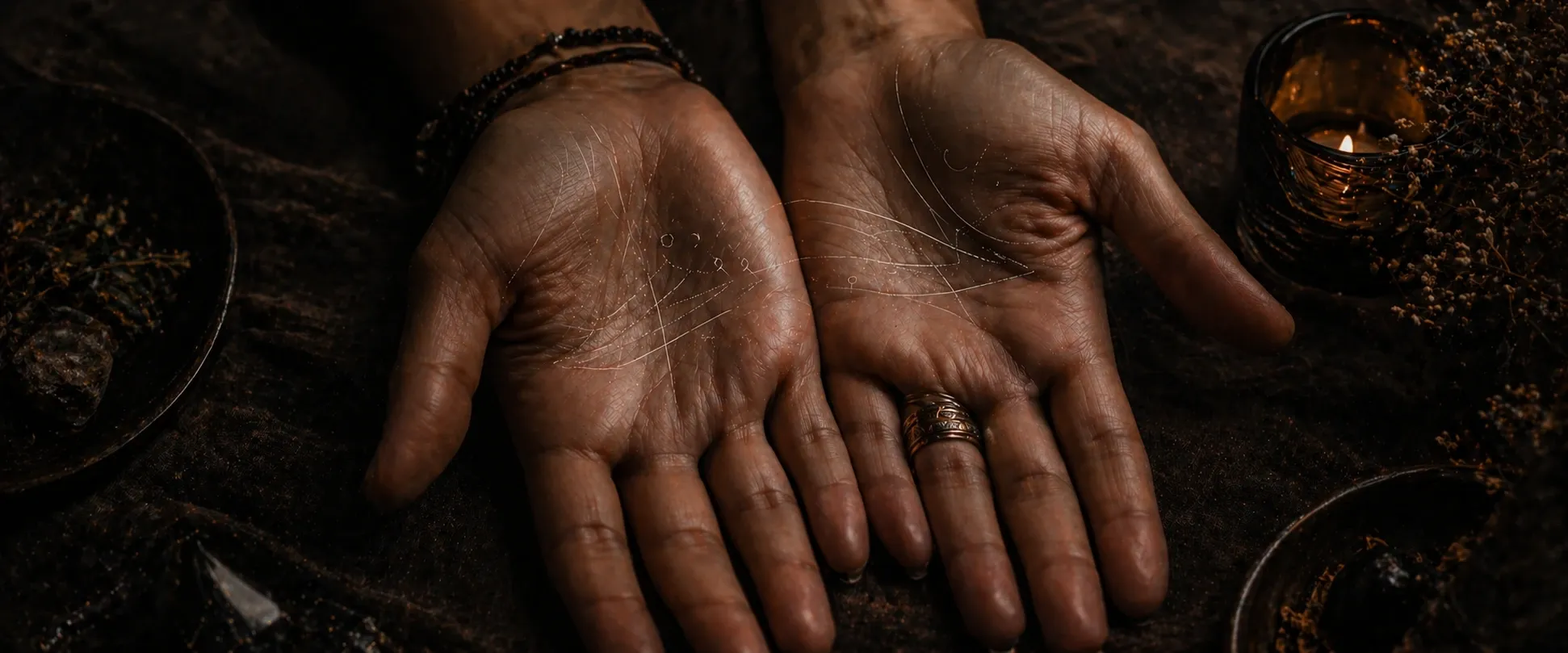
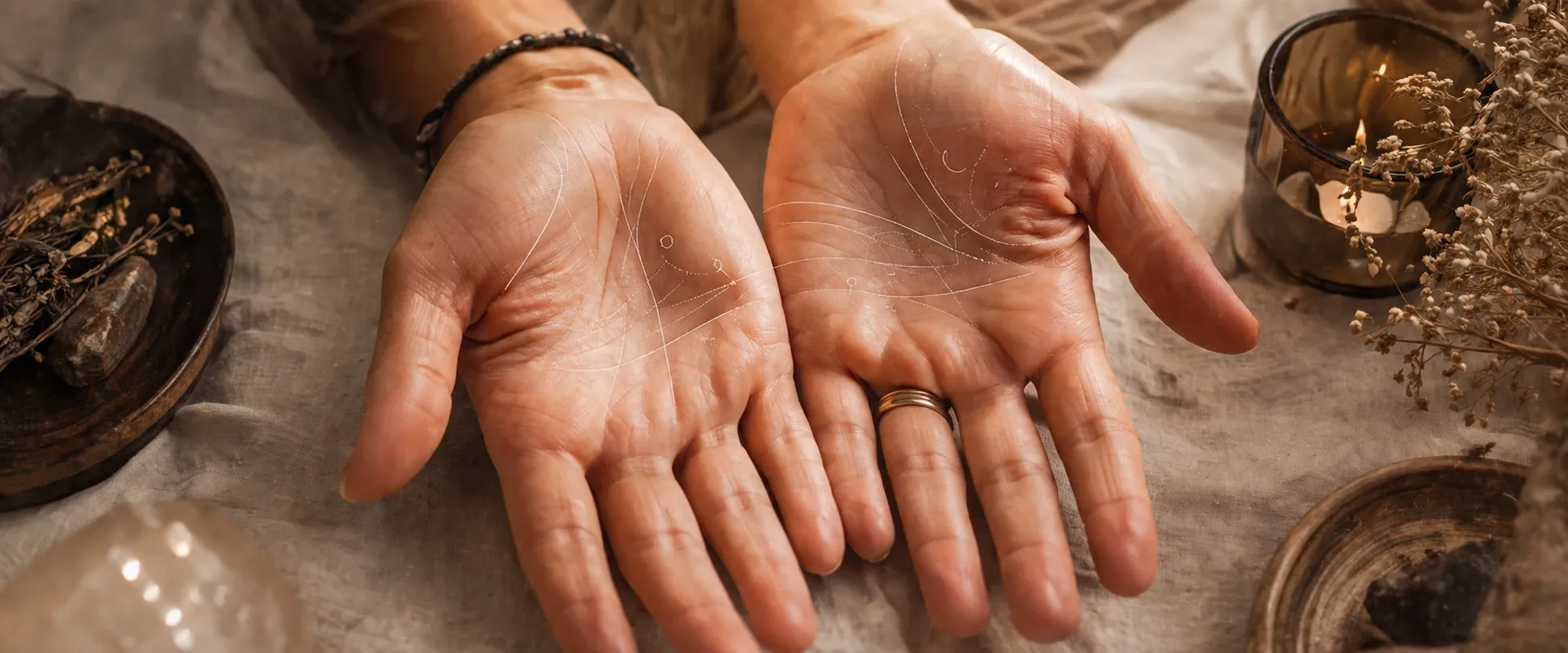
A palm astrology reading starts with the whole hand. The reader looks at palm shape, finger length, skin texture, line depth, and the balance between the left and right hands.
The older style gives each part of the hand a symbolic name. The index finger is linked with Jupiter. The ring finger is linked with Apollo. The fleshy pad under the thumb is called the Mount of Venus. These names are symbolic shorthand, not scientific labels.
If you want a personal reading, bring one real question. Love, career, timing, and family patterns are easier to discuss when the reader knows what you want to understand. For broader guidance, a psychic reading may fit better than trying to decode every mark alone.
Which hand should you read?
In a modern palmistry reading, both hands matter. The non-dominant hand is often read as inborn temperament, early pattern, and unused potential. The dominant hand shows choices, current habits, and the direction a person is actively building.
- Left hand. For many right-handed people, it points to natural traits, past influence, and emotional wiring.
- Right hand. For many right-handed people, it shows the present path, practiced behavior, and visible choices.
- Left-handed readers. Reverse the emphasis if the left hand is dominant.
The point is comparison. If one palm is clearer than the other, a reader may talk about the gap between natural potential and lived behavior.
Major palm lines and what they mean
If you want to know how to read palm lines, start with the major marks. Do not read them as isolated signs. Look at depth, length, breaks, forks, and how the lines interact.
| Palm line | Where it sits | What readers look for |
|---|---|---|
| Heart line | Across the upper palm under the fingers | Emotional style, affection, stress in love, and how feelings are expressed |
| Head line | Across the middle palm, starting near the thumb and index finger | Thinking style, focus, learning, and decision patterns |
| Life line | A curve around the thumb and Mount of Venus | Vitality, stamina, turning points, and how a person handles pressure |
| Fate line | A vertical line that may run toward the middle finger | Work path, outside pressure, direction, and changes in responsibility |
| Marriage lines | Small horizontal marks below the little finger | Relationship bonds, attachment patterns, and emotional closeness |
Heart line
The heart line runs across the top of the palm. A deep and long line is read as emotional openness and steady affection. A short or faint line can point to guarded feelings or a slower time opening up.
If the line forks at the end, the old reading is conflict between mind and heart. A straighter heart line feels more controlled. A curved one feels more romantic and expressive.
Head line
The head line begins between the thumb and index finger. A straight, clear line suggests practical thinking. A curved or sloping line suggests imagination. A fork at the end can show a person who moves between logic and art.
A broken or wavy head line should not be used to judge someone harshly. In a careful reading, it is treated as a sign of shifting focus, stress, or a mind that does not move in one neat path.
Life line
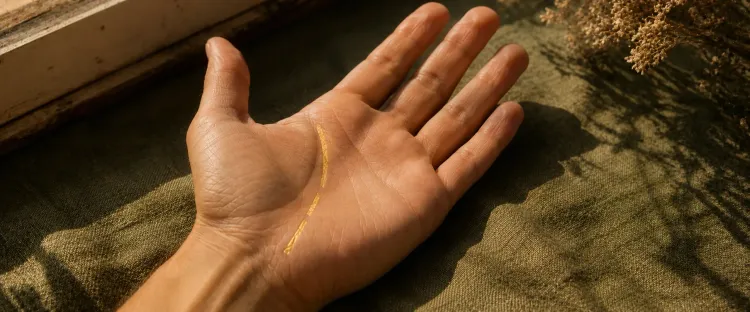
The life line is often misunderstood. It does not tell you the length of your life. It circles the thumb and shows how vitality, resilience, and major life phases are read in palmistry.
A deep, unbroken life line suggests strong energy. A faint line can suggest low stamina or a need for more rest. A chained line may point to uneven energy. For a deeper article, use life line palm reading.
Fate line
The fate line is linked with direction, work, and outside influence. A clear vertical line is read as focused purpose. A wavy or split line can show several work shifts or changes in responsibility.
Not everyone has a strong fate line. That does not mean a person has no future. It may mean the path is less fixed or more self-directed.
Marriage lines
Marriage lines are small marks under the little finger. They are read as deep bonds rather than legal paperwork. One clear line can point to a steady attachment. Several faint lines can point to changing emotional ties.
Use this section carefully. Palm reading should not replace a real conversation with a partner. If the question is about love now, a love reading may give more context.
Mounts, fingers, and smaller marks
After the major lines, a palm reader looks at the mounts and fingers. These areas help shape the reading, especially when the main lines are faint or mixed.
Jupiter finger and Jupiter mount
The Jupiter finger is the index finger. A long, straight index finger is read as confidence, status drive, and leadership. A shorter finger can suggest modesty or comfort working inside a group.
The Jupiter mount is the pad under the index finger. A raised, elastic mount points to ambition and self-belief. A flat or soft mount can show hesitation, doubt, or fear of competition.
Solomon's ring
Solomon's ring is a curved line at the base of the index finger. In palmistry, it is read as persuasion, insight, and the ability to understand people quickly. Teachers, speakers, and spiritual readers are often described with this mark in older palmistry texts.
Mount of Venus
The Mount of Venus is the fleshy area under the thumb. A full, firm mount is read as passion, warmth, physical energy, and appetite for life. A flatter mount can suggest calmer desire or a more contained emotional style.
Mars, Moon, Apollo, Mercury, and Saturn marks
The lower Mount of Mars sits near the thumb and is read for courage and resilience. The upper Mount of Mars is read for control under pressure. The Mount of the Moon, on the outer palm, points to imagination and intuition.
The Apollo finger and mount are linked with creativity, taste, and visibility. The Mercury finger and mount are read for speech, business sense, and quick thinking. The Saturn finger and mount point to discipline, caution, and seriousness.
Other marks can add detail. The line of Mars can strengthen the life line. The girdle of Venus adds emotional intensity. Bracelets at the wrist are read for vitality. Children lines are read as potential bonds with children, not a guarantee.
When to ask a palm reader
A palm reader is useful when you want help connecting the signs instead of memorizing a list. The same line can mean different things depending on the whole hand.
Ask when you have a real question. What keeps repeating in love? Why does work feel blocked? What strength do you keep underusing? A better reading brings the marks back to the life you are actually living.
Palm astrology reading offers insight, not inevitability. Your palm lines may show tendencies and pressure points, but they do not take choice away. Think of the hand as a mirror, not a verdict.